



Mathieu DOMECQ
Editor-in-chief of the API of the Month and Blog
In April, beekeeping enters a crucial phase. As spring blossoms transform the landscape, work at the apiary picks up pace abruptly, shifting from patient observation to intensive technical management. Following the initial inspection visits comes the time for strategic interventions that determine the year’s harvest and the survival of the colonies.
This month, we will focus in particular on installing the first super, a key step in channelling the colonies’ energy during the rapeseed honey flow, for example, as well as managing the balance between honey and pollen in the hive. We will also discuss monitoring swarming fever: a real spring challenge that sometimes requires splitting hives to prevent your best workers from flying away.
These practices, combining responsiveness and precision, are essential for supporting the bees’ natural dynamism.

Tasks of the month
If April is the month of ‘renewal’ for the beekeeper, it is above all because nature is in full swing. Following the first pollen harvests, honey-producing flowers burst into bloom, providing the bees with the resources they need to build wax and feed the brood, which is growing before our very eyes. It is this abundance that allows the colony to become strong enough to fill our famous supers. Here are the main tasks to carry out in the apiary this month:
Monitor the brood/store balance: In spring, changeable weather can quickly deplete stores: keep a close eye on the balance between brood and stores. If you can no longer see a honey ring above the brood and the outer frames are light, a feed of Apiinvert syrup may be recommended.
Similarly, if pollen is in short supply, adding a protein paste is essential to support larval growth. These food supplements secure the colony and act as a real boost to the queen’s egg-laying, ensuring a strong population for the coming honey flows.
Adding a super: As soon as your colony has filled almost all the frames and the first wax caps appear, add your first super to accommodate the rapeseed honey flow, for example. This step is crucial in April to provide space for the colony, boost production and thus reduce the urge to swarm.
Ensure the brood is well-centred and active before installing, if you wish, a queen excluder between the hive body and the super to ensure a clean honey harvest.
Splitting the colony: In April, monitoring the apiary becomes critical. As soon as a colony exceeds 6 brood frames, space begins to run out and swarming can take over the hive at any moment. To avoid losing half your bees and your future harvest, the most effective solution is to split the colony.
The simplest way to create a new swarm is to take three frames from the parent hive:
- 1 frame of eggs and larvae (open brood).
- 1 frame of sealed brood (ready to hatch).
- 1 frame of honey and pollen (provisions).
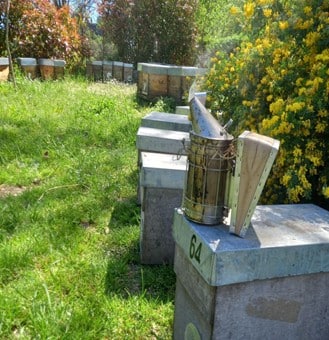
Place these three frames in a small hive, adding a frame of embossed wax and a partition to retain heat. Don’t forget to add around 2 kg of Apiinvert syrup to help the new colony get started. In the original hive, replace the empty spaces with new waxed frames: this will instantly provide work for the worker bees and laying space for the queen.
Once the small hive is set up (with or without the queen – it doesn’t matter at this stage), you have two options: either move the small hive to another apiary more than 3 km away, or keep it in the darkness of a garage for 24 to 48 hours before returning it to the apiary.
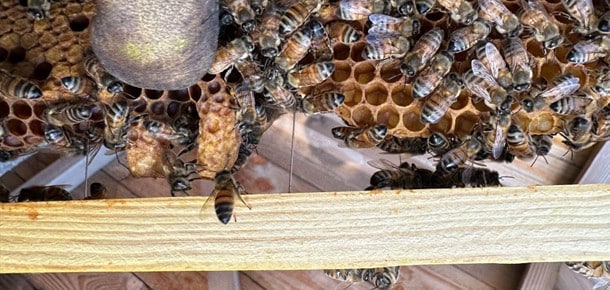
Finally, the trick to finding out where the queen is is simple: wait 4 or 5 days, then inspect both hives. The one with queen cells is the orphaned hive; it is already raising a new queen. The other contains the original queen and will continue to develop.
The melliferous flowers of the month
Rapeseed (nectar), fruit trees (pollen), dandelion (nectar), maple (nectar)…