



Mathieu DOMECQ
Editor-in-chief of the API of the Month and Blog
The shift towards a summer of extreme heat and prolonged drought has turned everything upside down. This August, the sunflower and lavender flowering seasons have already come to an end, often cut short by the plants’ water stress. The landscape is now dry, and nectar sources have dried up much earlier than expected.
This month, we will be looking at the direct impact of this weather on harvests and the vitality of colonies. We will see why it is essential to plan ahead for the harvest and to start treatment against the Varroa mite without delay. With bee populations declining early due to the summer food shortage, early treatment is now the only effective strategy to protect the emergence of future winter bees and ensure the survival of the colony.

Tasks of the month
August marks the end of the production season and the start of the next beekeeping year for the beekeeper. The hustle and bustle of the summer honey flows gives way to calm and vigilance in the face of the persistent drought. From parched sunflower fields to harvested lavender plateaus, nature is entering a dormant phase and nectar sources are becoming scarce.
The supers have now been removed and the honey is at the honey house. It is time for the beekeeper to take stock, but also to carry out rescue and protection measures. Here are the main tasks to be carried out at the apiary this month:
Finishing off the summer harvests and extracting honey: The very last honey flows (sunflower, lavender or fir) are now over. It is time to remove the final supers from the apiary to carry out the extraction. Take care not to leave the empty supers on the hives for too long to prevent looting between colonies, as natural resources become very scarce at this time of year.
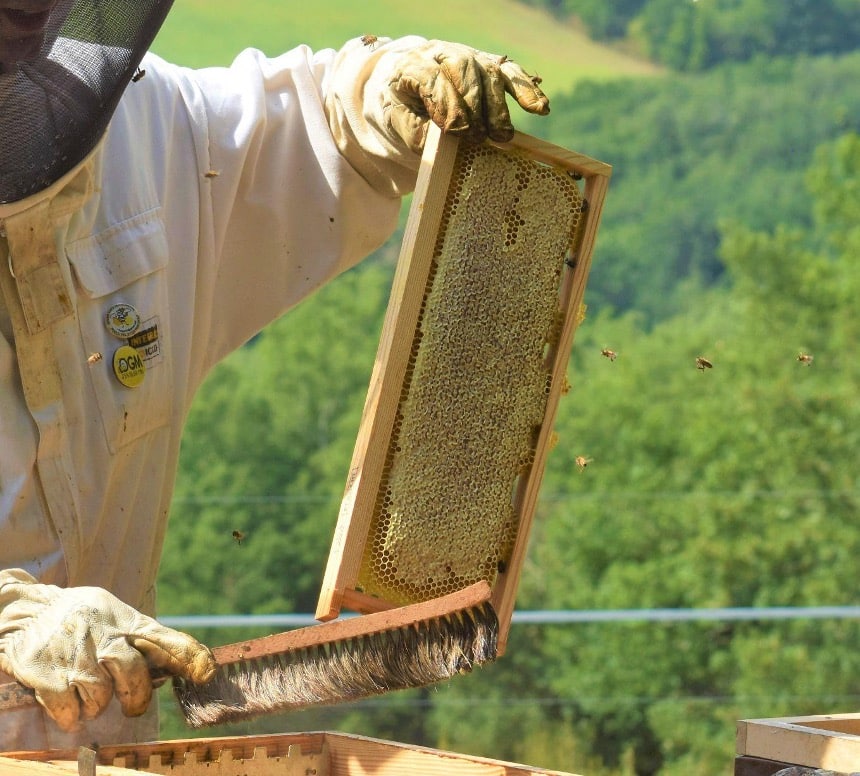
Start Varroa treatment: This is the top priority in August. As soon as the honey has been harvested, you must begin Varroa treatments. In August, the Varroa mite population is at its peak, whilst the bee population is declining. Early treatment is essential to protect the precious ‘winter bees’ – the ones that will keep the colony alive until spring. Whether you’re a hobbyist or a professional, opt for strip treatments rather than a homemade acid-based solution.
Feeding and stimulating the queen’s egg-laying: Due to drought and a lack of flowers, the queen may stop laying eggs early if there is a shortage of food. To ensure she lays enough winter bees, supplementary feeding to top up winter reserves may be necessary, depending on the weight of the hive.
The honey flowers of the month
clover (nectar), sunflower (nectar and pollen), lavender (nectar)…