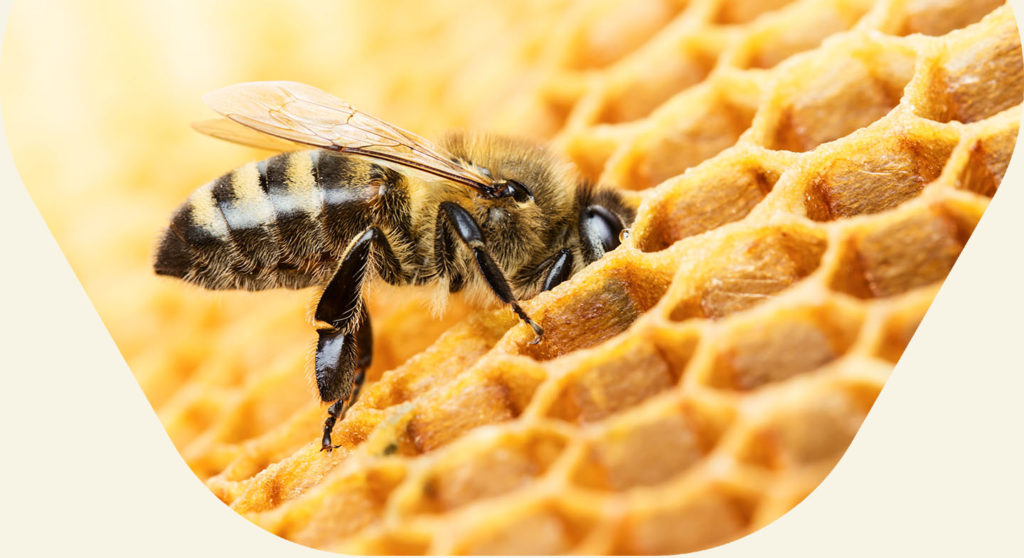




What is the link between wax and propolis?
From wax to propolis, what is the link between these two bee products? You will discover that for bees, one cannot exist without the other.
Propolis is a very complex material made up of plant resins and beeswax. Bees cannot make propolis without wax.
In its raw form, propolis is increasingly used in commerce today, particularly for oral and skin care. For these types of applications, laboratories that process propolis for packaging extract its beeswax content (the proportion of wax in propolis can vary from 20 to 80%).
In industry, this wax is recovered for use in candles, cheese coatings and pharmaceutical gelatine.
You can find this scientific research in the article right here : https://www.tandfonline.com/doi/abs/10.1080/00218839.2017.1384438?journalCode=tjar20
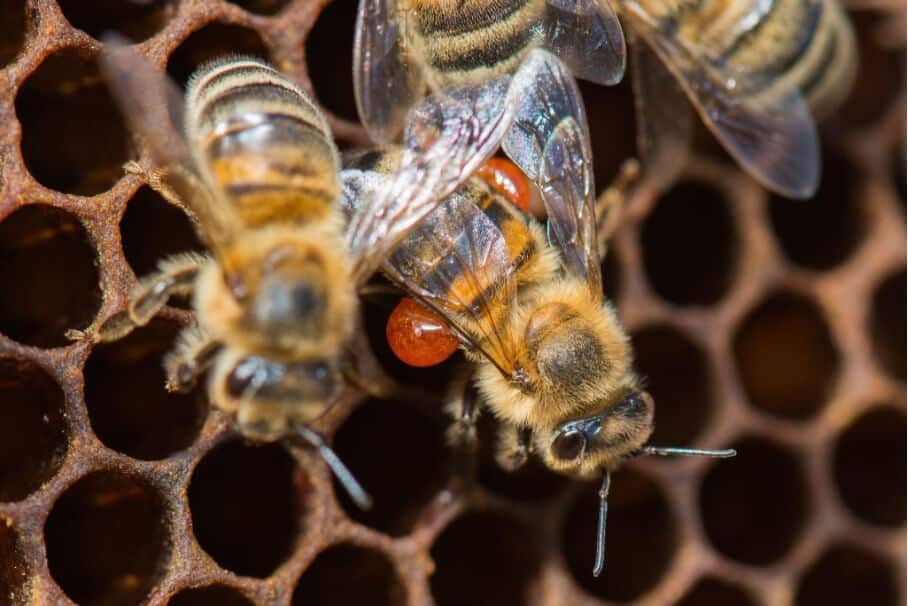
How many honeys exist in the world?
It is very difficult to count all the different flavours of honey that exist around us (there are probably more than 300 types of single-flower honey in the world). This is what makes our planet so rich!
In France alone, depending on the geographical area, there are more than 25 different types of honey. The west of France mainly produces rapeseed and sunflower honey; the north-east benefits from alfalfa, fir and forest honeys; lavender and garrigue honey can be found in Provence; while other regions see heather, buckwheat, buckthorn and chestnut honey flourish…
Taking a step back and looking at the global picture, even more surprising types of honey are harvested around the world, such as eucalyptus honey in Argentina, cedar honey in Turkey, orange blossom honey in Morocco, sainfoin honey in Kyrgyzstan, and the famous thyme honey in New Zealand.
Did you know that nearly two out of three jars of honey purchased in France do not come from France? The French are big consumers of honey (more than 50,000 tonnes per year, or 700g of honey per person), while the census carried out by beekeeping federations estimates French honey production at around 15,000 tonnes over the last two years, compared to more than 30,000 tonnes in the 1990s.
Very good honey that cannot be produced in France is imported, but the fraud prevention services estimate that nearly one in two jars entering the country does not comply with regulations and is therefore not considered to be 100% genuine honey. This is where consumers need to keep their eyes open!
Labelling has changed… So let’s look at the labels and, more specifically, the origin of the honey, in proportions, which must now be indicated on the jars… It is up to us, as consumers, to make the right choices… such as perhaps visiting beekeepers or apiaries to enjoy the true treasure of bees!
As usual, share your photos with us: we’ll post them on our website from the social networks with the hashtag: #apifonda #apiinvert!
See you next month on your API blog with your faithful partner, Les Ruchers De Mathieu!
LES RUCHERS DE MATHIEU
Miellerie & Magasin d’Apiculture
Photos ©lesruchersdemathieu