



The Spring Visit
The spring visit is the first time the hives are opened after winter. It is an essential step in the beekeeping calendar, as it allows the beekeeper to assess the actual condition of the colonies and lay the foundations for the coming season. In regions with milder winters, March marks the gradual reawakening of nature: temperatures begin to stabilise and the queen resumes egg-laying. However, this period remains delicate, with sometimes unstable weather and colonies that are still fragile, requiring short, thoughtful interventions at the right time.
Before opening the hive, observing it from the outside already provides valuable information. Regular activity at the flight board, particularly pollen collection, indicates that egg-laying has effectively resumed. A clean flight board, without any abnormal accumulation of waste, is generally a sign of an organised and dynamic colony. These initial indicators allow you to anticipate the state of the colony and adapt your visit accordingly.
The hive should only be opened when weather conditions are favourable, ideally when temperatures are between 15 and 17°C and there is no wind. The behaviour of the bees is an important indicator: excessive aggression may indicate that the hive has been open for too long, that the temperature is too low, or that the bees are stressed due to a lack of resources. Above all, the spring inspection should be quick and focused.
The main objective is to carry out an inventory of the colony. This involves checking for the presence of the queen, either directly or by observing recent egg-laying, assessing the quality of the brood and counting the number of brood frames in relation to honey and pollen frames. This balance between population, brood and reserves is crucial to the dynamics of the hive.
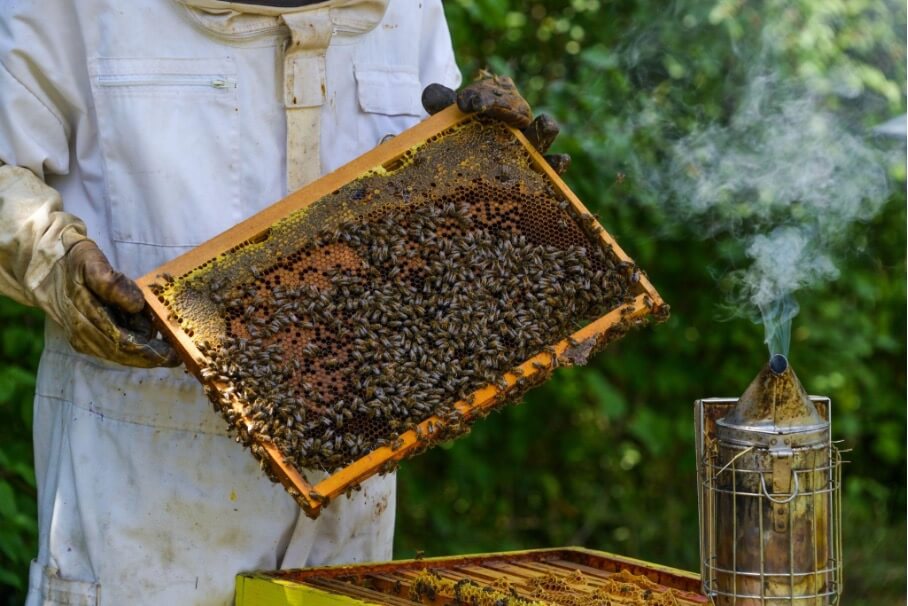
March is often a critical period in terms of reserves. The resumption of egg laying increases consumption, while external resources are still irregular. If necessary, supplementary feeding can be considered, in the form of remaining candy or, depending on the situation, light syrup or protein supplements. However, any stimulation must remain measured and justified.
It is also important to take into account the immediate environment of the apiary. Observing local blooms, such as goat willow, early fruit trees or rapeseed, allows you to anticipate the arrival of natural resources that can quickly stimulate colony development. Finally, the spring visit is the ideal time to check the quality of the queen, the regularity of her egg-laying and her general condition, as a productive queen in spring is a key factor in the success of the beekeeping season.
What should I do if my hive is dead?
When a hive dies during the winter, it is important not to leave it as it is, but there is no need to burn everything or start from scratch. A dead colony does not mean that the equipment is lost, provided that it is thoroughly cleaned and repaired.
The first step is to remove all the frames. These are often colonised by wax moths, recognisable by their silky webs and gnawed wax. Although this can be alarming, it is a common occurrence after the death of a colony. However, the affected frames must be destroyed, ideally by burning, in order to eliminate any source of contamination. It is strongly recommended that you start again on a clean slate by replacing these frames with new ones fitted with wax foundation sheets.
Once the frames have been removed, the hive itself must be thoroughly cleaned. Using a frame lifter, all wax bridges, propolis residues and other impurities inside the hive should be scraped off. This mechanical cleaning should be supplemented by lightly passing a blowtorch over the internal walls to sanitise the wood. This operation eliminates any remaining germs and parasites while preparing the hive to welcome a new colony.
The feeder must also be cleaned thoroughly. If it is made of plastic, washing it with hot soapy water is sufficient. If it is made of wood, the same scraping and blowtorching procedure can be applied.
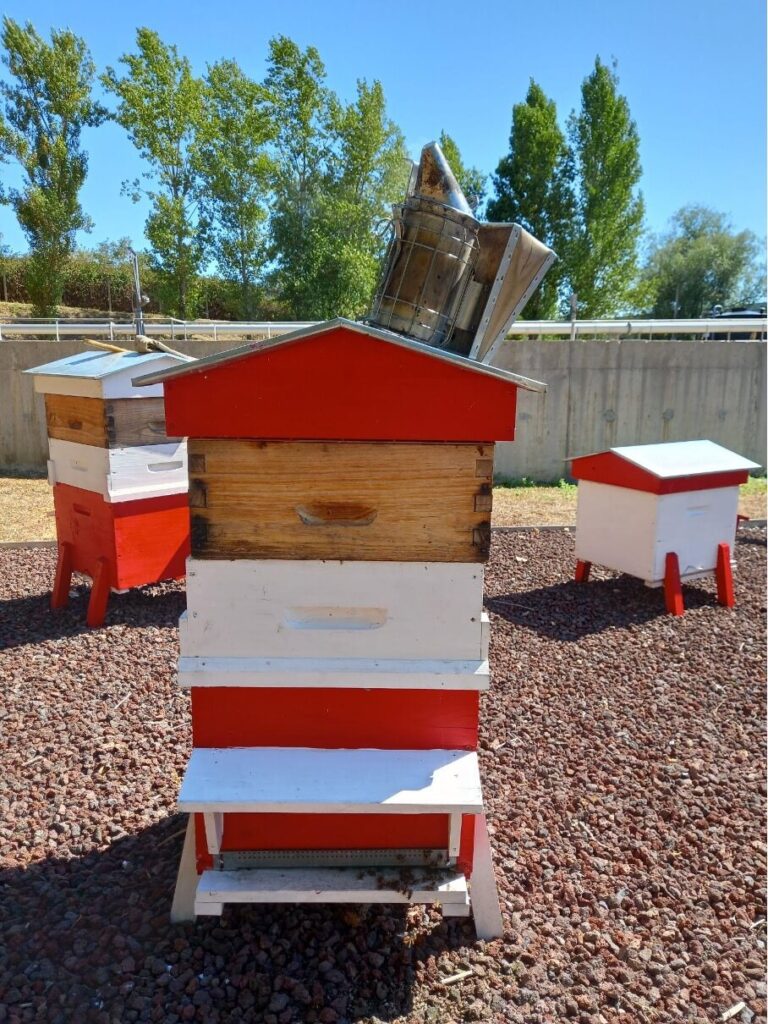
This refurbishment is also an opportunity to protect the hive in the long term. External maintenance of the wood is recommended, either with a suitable paint or linseed oil. It is important to remember that only the outside of the hive and the floor should be treated: the inside is naturally protected by the bees thanks to propolis. The paint used must be food-grade paint, available from beekeeping shops, so as not to pose any risk to future colonies. In addition to protecting the wood and extending the life of the hive — often more than ten years — the paint makes it possible to visually differentiate between hives, which helps the bees to find their way around and limits drift.
For those who prefer a more raw and natural look, linseed oil is an effective alternative. It should preferably be applied warm so that it penetrates the wood better and does not feel greasy to the touch. However, it should be borne in mind that linseed oil changes the appearance of the hive over time: the wood develops a patina and tends to darken gradually.
A properly cleaned, sanitised and protected hive can thus be reused safely and accommodate a new colony in good conditions.
As usual, share your photos with us: we’ll post them on our website from the social networks with the hashtag: #apifonda #apiinvert!
See you next month on your API blog with your faithful partner, Les Ruchers De Mathieu!
LES RUCHERS DE MATHIEU
Miellerie & Magasin d’Apiculture
Photos ©lesruchersdemathieu