



Mathieu DOMECQ
Editor-in-chief of the API of the Month and Blog
In recent weeks, the beekeeping sector has gathered in Agen (France) for the European Beekeeping Congress and in Friedrichshafen (Germany) for Eurobee. These events brought together thousands of beekeepers and enthusiasts who came to share their passion for bees.
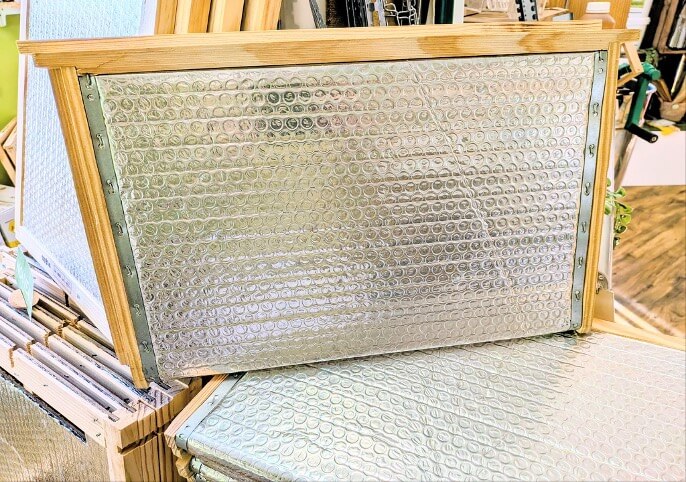
This November, temperatures have dropped and the rhythms of nature are prompting us to protect our colonies. Beekeepers must ensure that hives are well insulated and that winter feeding is properly organised: now is the time to provide bee fondant if reserves prove to be too low.
We will also look at how bees assess the effectiveness of their queen’s egg-laying through a subtle mix of pheromones and the regularity of the brood.

This month’s work
November marks the definitive arrival of winter at the apiary. The days are short, temperatures have dropped considerably, and the bees’ activity is now at its lowest. This is no longer the time for thorough inspections of the colonies: to avoid breaking up the winter cluster and risking the brood getting cold, the hives must now remain closed. The beekeeper focuses their efforts on external monitoring, managing reserves and planting for the future.
Here are the essential tasks to carry out at the apiary during November:
Securing the colonies: If the colony’s stores prove to be insufficient, you should stop using syrup (which the bees can no longer absorb or store in cold weather). Now is the time to place bee fondant (Apifonda®) directly on the frames or above the opening in the frame cover to ensure the colonies’ survival during the cold months. You can place a sheet of aluminium foil between the fondant and the frames, with access to it, to maintain good insulation for the winter cluster.
Reducing the hive’s volume: To help the bees retain heat more easily within the winter cluster, it is advisable to make the colony more compact. By inserting a partition, you isolate the space occupied by the bees and reduce the empty volume of the hive, which limits heat loss and optimises the colony’s energy consumption. Keep your colony on 5 or 6 frames if necessary and leave the honey frames on the other side of this partition, right up against the cluster.
Planting for the coming season: November is the ideal month to prepare for spring and enrich the bees’ environment. Make the most of this time of year to plant honey-producing trees and shrubs (such as hazel, Marsault willow, privet, mahonia or anemone tree), which will provide pollen and nectar as soon as next winter ends.
This month’s nectar-producing flowers
ivy, autumn asters, laurel and Japanese medlar.